
Zen is often misunderstood as a tradition of extreme austerity — of bare rooms, shaved heads, and years of silent sitting. While these are real expressions of Zen practice, they are not its essence. The essence of Zen is something far more portable, far more human, and far more relevant to ordinary daily life than any monastery could contain.
At its heart, Zen is a practice of direct experience. It asks not what you believe, but what you notice. Not what you think about reality, but how you are actually meeting it, in this moment, as you wash a bowl or fold a shirt or walk across a room.
"The whole universe is hidden in each ordinary moment. Zen is simply the practice of noticing."
Seven Zen Aesthetics for Everyday Life
The Seven Principles of Zen Aesthetics — Wabi-Sabi
Fukinsei — Asymmetry
Perfection is found in the irregular and imperfect. An asymmetrical arrangement is more alive than a symmetrical one.
Kanso — Simplicity
Clarity of expression through reduction. Remove what is unnecessary; honour what remains.
Koko — Austerity
Find richness in the sparse. A single well-chosen object speaks more than a dozen.
Shizen — Naturalness
Move without contrivance. Let things be as they are rather than forcing them into imposed shapes.
Yugen — Profound Grace
The awareness of the universe that triggers emotional responses too deep and mysterious for words.
The Zen Home
A Zen-influenced living space is not one stripped of all personality and warmth. It is one in which every object has been chosen with care, every surface has room to breathe, and the overall effect is one of calm readiness — a home that supports its inhabitant rather than overwhelming them.
Begin by identifying what in your home you truly love. These objects deserve space and visibility. Everything else — accumulated out of habit, guilt, or indecision — deserves either a new home or honest release. This is not minimalism for minimalism's sake. It is clarity in service of living.
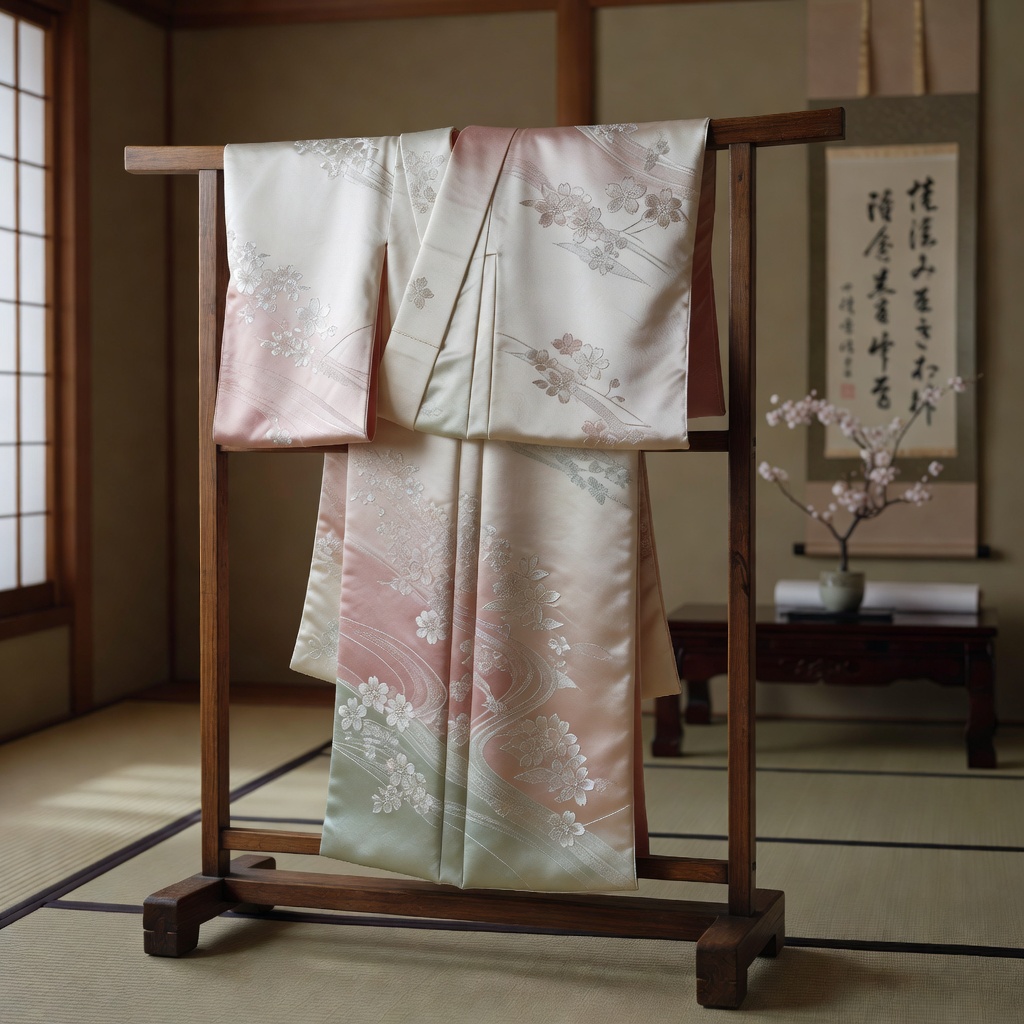
The Japanese art of careful folding reflects the Zen value of intention in every act
Zen in Daily Tasks
One of the most powerful teachings of Zen is that there are no ordinary moments. The Japanese concept of samu — work as spiritual practice — holds that washing dishes, sweeping floors, and cooking meals are not chores to be endured before the "real" living begins. They are the living. When approached with full attention and a willing spirit, even the most routine task becomes a form of meditation.
This does not require a monastic vow. It requires only the decision, moment by moment, to be present: to feel the warmth of the water as you wash, to notice the weight of the broom, to smell the garlic before it touches the pan.
The Practice of Soji
In Japanese schools and workplaces, soji (cleaning time) is a daily ritual in which everyone, regardless of rank, participates in cleaning shared spaces. This practice reflects a Zen insight: that the act of caring for a shared space is an act of caring for one another, and that a clean space is not merely pleasant but actively shapes the quality of thought and feeling that occurs within it.
A home cleaned with this spirit — not out of anxiety or obsession, but out of genuine care for the space and the people in it — feels different from a home cleaned any other way. The intention travels into the surfaces.
Everyday Zen: Where to Begin
- Choose one daily task — washing up, making the bed, preparing breakfast — and do it with complete, undivided attention for one week
- Identify one surface in your home and clear it entirely. Notice how the empty space affects the room
- When you feel rushed or overwhelmed, pause for three deliberate breaths before continuing
- Practice ending each day with a brief tidying of your living space — not a deep clean, just an act of care
- Look at familiar objects in your home as if seeing them for the first time
Zen does not ask you to achieve enlightenment. It asks only that you show up fully — to this breath, to this task, to this ordinary and irreplaceable moment. Begin there. The rest follows.